Moving to Mexico is exciting, but everyday life quickly teaches you that textbook Spanish and real-life Mexican Spanish are not always the same thing.
Ordering food or introducing yourself is one thing. Explaining that you’ve lost your passport, describing symptoms to a doctor, or asking what to do when public transportation is disrupted is something else entirely. These situations often happen unexpectedly, and staff may speak quickly or use vocabulary you have not practiced before.
The good news is that you do not need perfect Spanish to handle everyday situations more confidently. Many interactions follow familiar patterns, and learning a few useful phrases in advance can make it much easier to understand what is happening and respond appropriately.
In this guide, you’ll learn 42 practical Spanish phrases across six situations that residents and long-term visitors commonly face in Mexico: the post office, medical appointments, customer service, police, emergencies, and transportation problems. Each section includes natural Mexican Spanish, English meanings, a short dialogue, and useful vocabulary.
Table of Contents
What Spanish Phrases Do You Need for Daily Life in Mexico?
If you’re living in Mexico, or planning to move there, you do not need to memorize thousands of words before you can function confidently. It is more useful to learn phrases for the situations you are actually likely to encounter.
This guide focuses on:
- Sending letters and packages at the post office
- Visiting a doctor, clinic, or hospital
- Calling customer service
- Speaking with the police or reporting a crime
- Handling emergencies
- Solving transportation problems
For a broader guide covering immigration, government services, banking, healthcare, housing, utilities, and more, see The Ultimate Spanish Guide for Living in Mexico: 160+ Essential Phrases for Visa, Immigration, Moving & Daily Life.
At the Post Office: Sending Packages, Registered Mail, and Tracking Deliveries

Whether you’re mailing documents, sending a package abroad, buying stamps, or using registered mail, you may need a Correos de México office at some point while living in Mexico.
For extra practice, SpanishPod101’s Mexican Post Office, Part 1: Sending Letters, Postcards, and Packages Home lesson covers useful post-office language in Mexican Spanish.
Common Situations
You may visit the post office to:
- Send a domestic package
- Send a parcel internationally
- Buy stamps
- Use registered mail
- Ask about tracking
- Ask about delivery times
Essential Spanish Phrases
| Spanish | English |
|---|---|
| Quisiera enviar un paquete. | “I’d like to send a package.” |
| Es un envío internacional. | “It’s an international shipment.” |
| ¿Cuánto cuesta enviar este paquete? | “How much does it cost to send this package?” |
| ¿Puedo rastrear el envío? | “Can I track the shipment?” |
| Quisiera comprar unas estampillas. | “I’d like to buy some stamps.” |
| Quisiera enviarlo por correo registrado. | “I’d like to send it by registered mail.” |
| ¿Cuánto tarda aproximadamente? | “About how long will it take?” |
Sample Dialogue
Customer
Buenos días. Quisiera enviar este paquete a Canadá.
“Good morning. I’d like to send this package to Canada.”
Clerk
¿Quiere un envío con número de guía?
“Would you like a shipment with a tracking number?”
Customer
Sí, por favor. ¿Cuánto tarda aproximadamente?
“Yes, please. About how long will it take?”
Clerk
Déjeme revisar las opciones de envío.
“Let me check the shipping options.”
Useful Vocabulary
| Spanish | English |
|---|---|
| la oficina de correos | “post office” |
| un paquete | “package / parcel” |
| una estampilla | “stamp” |
| un envío | “shipment” |
| el número de guía | “tracking number” |
| el rastreo | “tracking” |
| el correo registrado | “registered mail” |
| el destinatario | “recipient” |
For eligible shipments, you can check the status using Correos de México’s official shipment-tracking service.
Visiting a Doctor, Clinic, or Hospital

Nobody plans to get sick, but learning a few medical phrases before you need them can make a medical visit much less stressful.
SpanishPod101’s Getting Medical Assistance in Mexico lesson provides extra practice with useful Mexican Spanish for health problems.
Healthcare arrangements vary according to your employment, insurance, and individual circumstances. If you are registered with the IMSS, you may be asked for information such as your Número de Seguridad Social (NSS) or CURP during certain procedures.
Common Situations
At a medical appointment, you may need to:
- Say that it is your first visit
- Explain whether you have insurance
- Describe your symptoms
- Explain where you have pain
- Ask whether someone speaks English
- Find a pharmacy
Essential Spanish Phrases
| Spanish | English |
|---|---|
| Es la primera vez que vengo. | “This is my first visit.” |
| Tengo seguro médico. | “I have health insurance.” |
| Tengo fiebre. | “I have a fever.” |
| Me duele la cabeza. | “I have a headache.” |
| Me duele el estómago. | “My stomach hurts.” |
| ¿Hay alguien que hable inglés? | “Is there anyone who speaks English?” |
| ¿Dónde está la farmacia más cercana? | “Where is the nearest pharmacy?” |
Sample Dialogue
Receptionist
Buenos días. ¿Es la primera vez que viene?
“Good morning. Is this your first visit?”
Patient
Sí, es la primera vez que vengo.
“Yes, this is my first visit.”
Receptionist
¿Tiene seguro médico?
“Do you have health insurance?”
Patient
Sí. ¿Qué información necesita?
“Yes. What information do you need?”
Useful Vocabulary
| Spanish | English |
|---|---|
| un médico / una médica | “doctor” |
| un hospital | “hospital” |
| una clínica | “clinic” |
| un enfermero / una enfermera | “nurse” |
| un síntoma | “symptom” |
| una receta | “prescription” |
| un medicamento | “medicine / medication” |
| una farmacia | “pharmacy” |
| el Número de Seguridad Social (NSS) | “Social Security Number” |
Helpful Phrases When You Don’t Understand
¿Puede repetirlo, por favor?
“Could you repeat that, please?”
¿Puede hablar un poco más despacio?
“Could you speak a little more slowly?”
Foreign residents may have access to IMSS coverage depending on their employment or voluntary enrollment situation. For official information, see IMSS guidance for foreign residents in Mexico.
Calling Customer Service
Calling an internet provider, phone company, bank, utility company, insurer, or another service provider can feel intimidating if Spanish is not your first language.
The good news is that these calls are usually structured. You may be asked for your customer number, phone number, address, or other account information before the representative can help.
The SpanishPod101 Using a Phone in Spanish pathway is a useful place to practice phone conversations and Mexican Spanish phone manners.
Common Situations
You may need to contact customer service to:
- Report a service problem
- Ask about your account
- Update your address
- Modify a contract or plan
- Ask about a charge or bill
- Request technical support
Essential Spanish Phrases
| Spanish | English |
|---|---|
| Tengo un problema con el servicio. | “I have a problem with the service.” |
| Mi internet no funciona. | “My internet isn’t working.” |
| Quisiera cambiar mi plan. | “I’d like to change my plan.” |
| Quisiera actualizar mi domicilio. | “I’d like to update my address.” |
| ¿Me lo puede explicar otra vez? | “Could you explain that to me again?” |
| ¿Puede hablar un poco más despacio? | “Could you speak a little more slowly?” |
| Quisiera hablar con un asesor, por favor. | “I’d like to speak to a representative, please.” |
Sample Dialogue
Representative
Servicio a clientes, buenos días. ¿En qué le puedo ayudar?
“Customer service, good morning. How can I help you?”
Customer
Buenos días. Mi internet no funciona.
“Good morning. My internet isn’t working.”
Representative
Voy a revisar su servicio. ¿Me puede dar su número de cliente?
“I’ll check your service. Could you give me your customer number?”
Customer
Sí, un momento, por favor.
“Yes, one moment, please.”
Useful Vocabulary
| Spanish | English |
|---|---|
| el servicio a clientes | “customer service” |
| un asesor / una asesora | “representative / advisor” |
| un contrato | “contract” |
| un plan | “plan” |
| un cargo | “charge” |
| un recibo | “bill / receipt” |
| una falla | “fault / service problem” |
| el número de cliente | “customer number” |
| la cancelación | “cancellation” |
Going to the Police or Reporting a Crime
Hopefully, you will not often need police assistance, but it is useful to know what to say if you lose important documents, have something stolen, or need immediate help.
Depending on the situation, a formal criminal complaint may be handled through the local Fiscalía or Ministerio Público rather than simply at a police station. If you are unsure where to go, asking where to file the report is useful.
For emergency-language practice, SpanishPod101’s Asking for Help in Mexico lesson covers how to ask for help and contact the police.
Common Situations
You may need to:
- Report a lost wallet or passport
- Report a stolen item
- Ask where to file a complaint
- Ask for immediate help
- Ask whether someone speaks English
- Explain where or when something happened
Essential Spanish Phrases
| Spanish | English |
|---|---|
| Perdí mi cartera. | “I lost my wallet.” |
| Perdí mi pasaporte. | “I lost my passport.” |
| Me robaron la bicicleta. | “My bicycle was stolen.” |
| Quiero presentar una denuncia. | “I’d like to file a police report.” |
| ¿Me puede ayudar, por favor? | “Can you help me, please?” |
| ¿Hay alguien que hable inglés? | “Is there anyone who speaks English?” |
| ¿Dónde puedo presentar la denuncia? | “Where can I file the report?” |
Sample Dialogue
Officer
Buenos días. ¿Qué pasó?
“Good morning. What happened?”
Resident
Me robaron la bicicleta y quiero presentar una denuncia.
“My bicycle was stolen, and I’d like to file a report.”
Officer
¿Sabe dónde y cuándo ocurrió?
“Do you know where and when it happened?”
Resident
Sí. Fue afuera de la estación anoche.
“Yes. It happened outside the station last night.”
Useful Vocabulary
| Spanish | English |
|---|---|
| la policía | “police” |
| una patrulla | “police patrol / patrol car” |
| una denuncia | “police report / criminal complaint” |
| la Fiscalía | “prosecutor’s office” |
| el Ministerio Público | “public prosecutor’s office” |
| un robo | “robbery / theft” |
| un extravío | “loss / misplacement” |
| una identificación | “identification” |
Survival Tip
When you’re stressed, start with one clear sentence:
Perdí mi pasaporte.
“I lost my passport.”
Me robaron el teléfono.
“My phone was stolen.”
¿Me puede ayudar, por favor?
“Can you help me, please?”
Once the situation is clear, the officer or staff member can tell you what to do next.
Emergency Situations
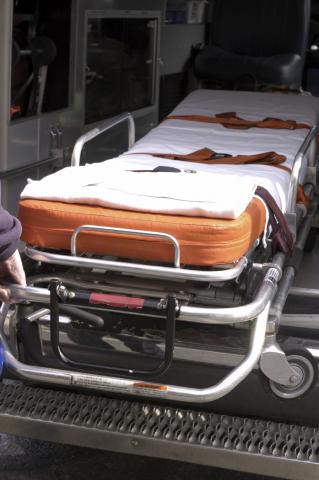
Emergencies are stressful in any language. Whether you need urgent medical help, witness an accident, or discover a fire, clear communication matters much more than perfect grammar.
In Mexico:
- 911 = National emergency number for medical, public-safety, and civil-protection emergencies
The 911 service is the nationwide number for situations that require immediate emergency assistance.
SpanishPod101’s Essential Spanish for Emergencies pathway provides additional practice for medical emergencies, calling the police, and other urgent situations.
Common Situations
You may need Spanish if you:
- Need an ambulance
- Witness an accident
- Report a fire
- Need the police
- Cannot breathe
- Need to explain your location
Essential Spanish Phrases
| Spanish | English |
|---|---|
| ¡Ayuda! | “Help!” |
| Necesito una ambulancia. | “I need an ambulance.” |
| Hay un incendio. | “There’s a fire.” |
| Hubo un accidente. | “There’s been an accident.” |
| No puedo respirar. | “I can’t breathe.” |
| Llame a la policía, por favor. | “Call the police, please.” |
| Estamos afuera de la estación. | “We’re outside the station.” |
Sample Dialogue
Emergency Operator
911, ¿cuál es su emergencia?
“911, what is your emergency?”
Caller
Hubo un accidente. Necesito una ambulancia.
“There’s been an accident. I need an ambulance.”
Operator
¿En dónde se encuentra?
“Where are you?”
Caller
Estamos afuera de la estación.
“We’re outside the station.”
Useful Vocabulary
| Spanish | English |
|---|---|
| una ambulancia | “ambulance” |
| los bomberos | “fire department / firefighters” |
| un incendio | “fire” |
| un accidente | “accident” |
| una lesión | “injury” |
| una emergencia | “emergency” |
| urgencias | “emergency department / emergency care” |
If You Don’t Know Your Exact Location
Tell the operator the nearest:
- Metro, bus, or train station
- Store or restaurant
- Intersection
- Building
- Landmark
For official information about Mexico’s emergency number, see the Government of Mexico’s 911 guidance.
Transportation Problems

Public transportation varies widely across Mexico. Depending on the city or region, you may use buses, camiones, metro systems, Metrobús or similar rapid-transit services, taxis, or long-distance buses.
For extra practice with Mexican transportation language, SpanishPod101’s Getting Around (Mexican Spanish) pathway covers directions, buses, public transportation, and other practical situations.
Common Situations
You may need help when:
- A bus or other service is delayed
- A route is temporarily suspended
- You need to confirm where a bus goes
- You need to know where to get off
- You need to transfer
- You need to reload a transit card
- You miss your stop
Essential Spanish Phrases
| Spanish | English |
|---|---|
| ¿Este camión va al Centro? | “Does this bus go downtown?” |
| ¿En qué parada me bajo? | “Which stop do I get off at?” |
| ¿Dónde hago transbordo? | “Where do I transfer?” |
| ¿Está suspendido el servicio? | “Is the service suspended?” |
| ¿Cuánto tarda en pasar el siguiente autobús? | “How long until the next bus comes?” |
| ¿Dónde puedo recargar mi tarjeta? | “Where can I reload my card?” |
| Me pasé de la parada. | “I missed my stop.” |
Sample Dialogue
Passenger
Disculpe. ¿Este camión va al Centro?
“Excuse me. Does this bus go downtown?”
Driver
Sí, pero tiene que bajarse en la siguiente avenida y hacer transbordo.
“Yes, but you need to get off at the next avenue and transfer.”
Passenger
¿Dónde hago transbordo?
“Where do I transfer?”
Driver
En la parada de la esquina.
“At the stop on the corner.”
Useful Vocabulary
| Spanish | English |
|---|---|
| un camión | “city bus” |
| un autobús | “bus” |
| el metro | “metro / subway” |
| una estación | “station” |
| una parada | “stop” |
| un transbordo | “transfer” |
| una tarjeta de transporte | “transit card” |
| una ruta | “route” |
| un retraso | “delay” |
Essential Spanish Cheat Sheet for Everyday Life in Mexico
Need a quick refresher before heading out? Save this table to your phone or bookmark the page.
| Situation | Spanish | English |
|---|---|---|
| Post Office | Quisiera enviar un paquete. | “I’d like to send a package.” |
| Post Office | ¿Puedo rastrear el envío? | “Can I track the shipment?” |
| Medical | Tengo fiebre. | “I have a fever.” |
| Medical | Me duele la cabeza. | “I have a headache.” |
| Customer Service | Mi internet no funciona. | “The internet isn’t working.” |
| Customer Service | ¿Puede hablar un poco más despacio? | “Could you speak a little more slowly?” |
| Police | Quiero presentar una denuncia. | “I’d like to file a police report.” |
| Police | ¿Me puede ayudar, por favor? | “Can you help me, please?” |
| Emergency | Necesito una ambulancia. | “I need an ambulance.” |
| Emergency | Llame a la policía, por favor. | “Call the police, please.” |
| Transportation | ¿Dónde hago transbordo? | “Where do I transfer?” |
| Transportation | Me pasé de la parada. | “I missed my stop.” |
How to Practice These Situations Before You Need Them
The best time to learn practical Mexican Spanish is before you urgently need it.
Focus on Situations You’ll Actually Experience
Practice conversations you are likely to encounter as someone living in Mexico:
- Asking for help
- Describing symptoms
- Sending packages
- Reporting stolen or lost items
- Dealing with transportation problems
- Making phone calls
- Talking with customer service
Learn Through Complete Dialogues
Studying complete conversations helps you learn more than isolated words. Dialogues show you:
- Natural pronunciation
- Common sentence patterns
- Polite expressions
- Expected responses
- Vocabulary in context
- Conversational rhythm
Over time, you can start recognizing entire chunks of Spanish instead of translating word by word.
A Simple Listening Practice Routine
- Listen once without reading.
- Read the transcript.
- Listen again.
- Repeat each sentence aloud.
- Role-play both speakers.
- Review the dialogue again a few days later.
Practice Real-Life Mexican Spanish with SpanishPod101
The best way to prepare for life in Mexico is to practice the conversations you are most likely to have.
SpanishPod101 includes dialogue-based lessons, vocabulary practice, listening exercises, transcripts, and other resources for everyday communication. You can start with Level 1.1 Can Do Mexican Spanish, an Absolute Beginner pathway focused on practical Mexican Spanish, and move into more situation-specific material as your Spanish improves.
Whether you are preparing before your move or already living in Mexico, regular listening and speaking practice can make these situations feel much more familiar.
When you’re ready to keep building practical Mexican Spanish through dialogues, vocabulary, and listening practice, start learning real-life Spanish with SpanishPod101.
Frequently Asked Questions
Can I live in Mexico without speaking Spanish?
It is possible to manage some situations with limited Spanish, particularly when English-speaking help is available. However, even a small amount of practical Spanish can make medical appointments, transportation, customer service, and unexpected problems much easier to handle.
What level of Spanish do I need to live comfortably in Mexico?
There is no single CEFR level that guarantees comfortable daily life. Real-life communication depends on listening speed, vocabulary, confidence, and the situations you encounter.
Even beginners can make daily life easier by learning practical phrases for the situations they face most often.
Do doctors and hospital staff in Mexico speak English?
Some medical professionals speak English, particularly in larger cities and areas with many international residents or visitors, but availability varies by facility and individual staff member. It is useful to know a few basic medical phrases and how to ask whether someone speaks English.
Should I use tú or usted in these situations?
Use usted as a safe default with staff, doctors, police officers, customer-service representatives, older strangers, and people you do not know, especially in official or professional situations.
For example:
¿Me puede ayudar, por favor?
“Can you help me, please?”
is a natural polite form in these situations. In more casual settings, people may quickly switch to tú.
Final Thoughts
Living in Mexico does not require perfect Spanish. What matters is being able to communicate when you need help.
Whether you are sending a package, seeing a doctor, reporting a theft, calling customer service, handling an emergency, or dealing with a transportation problem, a few practical phrases can give you a clear way to begin the conversation.
Start with one situation. Practice a few phrases. Listen to a short dialogue. Then build from there. With repeated exposure, conversations that once felt intimidating can become much more manageable.
We’d Love to Hear From You
Which of these six situations would make you the most nervous in Spanish?
- Visiting a doctor or hospital
- Going to the post office
- Talking to the police
- Calling customer service
- Handling an emergency
- Asking for help with transportation
Leave a comment below and let us know. We’ll recommend lessons and resources to help you feel more confident in that situation.