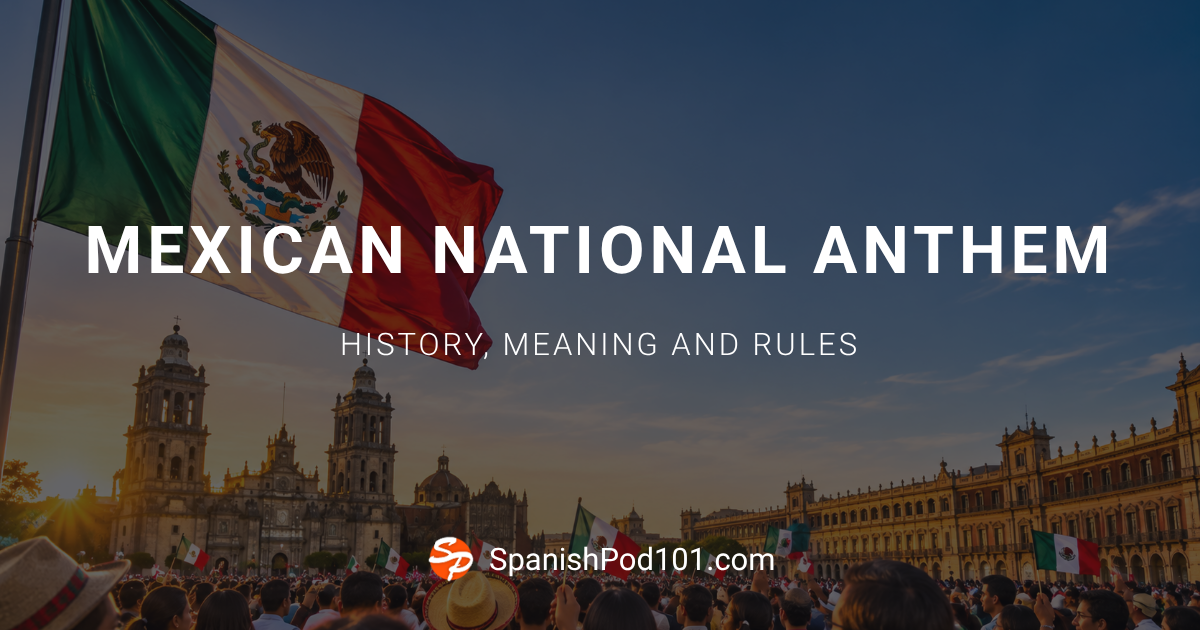
On June 11, 2026, more than 80,000 fans packed the Estadio Ciudad de México for the opening match of the FIFA World Cup. When singer Alejandro Fernández began the first notes of the anthem, he barely needed the microphone: the whole stadium sang every word with him, before Mexico went on to beat South Africa 2–0.
That’s the Mexican national anthem, the Himno Nacional Mexicano, and it’s the exact opposite of Spain’s wordless Marcha Real, which we covered in our post on the Spanish national anthem. Mexico’s anthem has lyrics, a dramatic backstory and its own law. In this guide, you’ll get the short answer first, then the history, what the words mean, the rules, when you’ll hear it, and useful Spanish vocabulary to talk about it.
What Is the National Anthem of Mexico? The Short Answer
Quick answer
Mexico’s national anthem is the Himno Nacional Mexicano, often called by its first line, “Mexicanos, al grito de guerra” (“Mexicans, at the cry of war”). Poet Francisco González Bocanegra wrote the words in 1853, Catalan composer Jaime Nunó wrote the music in 1854, and it became official in 1943. Unlike Spain’s anthem, it has lyrics, and Mexicans sing them loudly and proudly.
| Name | Himno Nacional Mexicano |
| Lyrics | Francisco González Bocanegra (1853) |
| Music | Jaime Nunó (1854) |
| First performed | September 15, 1854, Teatro Santa Anna, Mexico City |
| Official since | 1943, by decree of President Manuel Ávila Camacho |
| Official lyrics | The chorus plus 4 of the original 10 stanzas |
| What people do | Stand at attention and sing along |
Table of Contents
- What Is the Mexican National Anthem?
- Himno Nacional Timeline: From 1853 to Today
- The Story Behind the Words and the Music
- What Do the Lyrics Mean?
- The Official Rules
- When Do You Hear the Himno Nacional?
- The Anthem at Sports Events
- Useful Spanish Vocabulary
- Quiz: How Well Do You Know the Himno Nacional?
- Mexican National Anthem FAQ
- Final Thoughts
1. What Is the Mexican National Anthem?
The national anthem of Mexico is the Himno Nacional Mexicano (“Mexican National Anthem.”). Many people call it by its first line, Mexicanos, al grito de guerra (“Mexicans, at the cry of war.”), or simply el himno (“the anthem”).
It’s one of Mexico’s three símbolos patrios (“national symbols”), together with la bandera (“the flag”) and el escudo (“the coat of arms”), the eagle on a cactus eating a serpent. All three are protected by a special law from 1984, the Ley sobre el Escudo, la Bandera y el Himno Nacionales.
2. Himno Nacional Timeline: From 1853 to Today

Mexico had been independent since 1821, but it still had no national anthem. That changed in the 1850s. Here’s the whole story at a glance. The labels show which events made something official.
| Year | What happened | Status |
|---|---|---|
| 1853 | On November 12, the government of President Antonio López de Santa Anna announces a contest for the anthem’s lyrics. | Other |
| 1854 | On February 3, Francisco González Bocanegra’s poem is announced as the winner. | Other |
| 1854 | On August 12, Jaime Nunó’s music is chosen in a second contest. | Other |
| 1854 | On September 15, the anthem is first performed at the Teatro Santa Anna in Mexico City. | Other |
| 1855 onward | Santa Anna falls from power. Stanzas praising him and Emperor Agustín de Iturbide drop out of use. | Other |
| 1943 | President Manuel Ávila Camacho’s decree makes the anthem official, with the chorus and four stanzas. | Official |
| 1984 | The Law on the National Coat of Arms, Flag and Anthem sets today’s rules. | Official |
| 2005 | A reform allows Indigenous communities to sing the anthem in their own languages. | Official |
| 2026 | 87,000 fans sing it at the opening match of the World Cup in Mexico City. | Other |
Surprisingly, the anthem was sung at civic ceremonies for almost 90 years before it was made official. And neither of its creators lived to see that day: González Bocanegra died in 1861, and Nunó died in New York in 1908.
3. The Story Behind the Words and the Music
The story of the lyrics is one of Mexico’s favorite legends. González Bocanegra, a young poet from San Luis Potosí, reportedly didn’t want to enter the contest. His fiancée, Guadalupe González del Pino, believed in his talent so much that she locked him in a room of her family’s house and wouldn’t let him out until he had written the poem. A few hours later, he slipped the finished verses under the door.
Whether or not it happened exactly like that, his poem beat around two dozen other entries. The music took longer. After a first round of entries, a second contest was held, and the winner was Jaime Nunó, a Catalan band director who had met Santa Anna in Cuba and come to Mexico to lead its military bands. His entry was titled Dios y Libertad (“God and Liberty”).

Nunó later moved to the United States and was almost forgotten in Mexico, until 1901, when he was rediscovered and invited back for a tribute. In 1942, his remains were brought back to Mexico City, and today he rests next to González Bocanegra in the Rotonda de las Personas Ilustres (“Rotunda of Illustrious Persons”).
4. What Do the Lyrics Mean?
The original poem had ten stanzas and a chorus. The official version, set by law, keeps the chorus and four stanzas, which correspond to stanzas I, V, VI and X of the original. The verses honoring Santa Anna and Iturbide are gone. Here’s what each part is about:
| Part | What it’s about |
|---|---|
| Chorus | A call to arms: Mexicans should get their swords and horses ready, and the earth should shake at the roar of the cannon. |
| Stanza I | Peace for the homeland: if a foreign enemy ever dares to invade, every one of Mexico’s sons is a soldier. |
| Stanza II | A war with no truce against anyone who tries to stain the nation’s honor, with the flag held high. |
| Stanza III | Mexicans would rather die than see their homeland conquered and their homes destroyed. |
| Stanza IV | A promise: the homeland’s sons swear to give their last breath for it, and to be remembered with honor. |
Written in 1853, just a few years after the war with the United States, the lyrics are full of war imagery and old-fashioned Spanish. You’ll find words like el acero (“steel, meaning a sword”), el bridón (“a warhorse”) and el clarín (“the bugle”). If you want to read the full official lyrics, they’re published in article 57 of the national symbols law.
Fun fact: who is Masiosare?
One line in the first stanza begins with the old-fashioned phrase mas si osare (“but if … should dare”), in a rare verb form called the future subjunctive. Generations of Mexican kids have heard it as one word, Masiosare, and imagined it was the name of the enemy! Today, “Masiosare” is a famous joke in Mexico and a nickname for a foreign enemy.
5. The Official Rules
Mexico takes its anthem seriously. The 1984 law on national symbols has a whole chapter about it. Here are the main rules:
| Rule | What it means |
|---|---|
| Respect | When the anthem is played, everyone stands at attention, and men take off their hats. |
| No changes | You can’t change the lyrics or the music, or perform it in other arrangements or mixed with other songs. |
| No profit | Singing or playing it for commercial purposes is not allowed. |
| On the air | Radio and TV stations must broadcast it at 6:00 a.m. and at midnight. On TV, the flag is shown at the same time. |
| At school | Teaching the anthem is compulsory in all basic-education schools. |
| Indigenous languages | Indigenous peoples and communities can sing it in their own languages, with translations reviewed by the National Institute of Indigenous Languages. |
| Penalties | Breaking the rules can mean a warning, a fine or, in serious cases, up to 36 hours’ arrest. |
That’s why, when a singer performs the anthem at a big event, all of Mexico listens closely, and a forgotten or changed word quickly becomes national news.
6. When Do You Hear the Himno Nacional?

Unlike many anthems, you don’t only hear Mexico’s at big state events. It’s part of everyday life:
- At school: many schools hold honores a la bandera (“honors to the flag”) on Monday mornings. Students line up, a student color guard carries the flag, and everyone sings the anthem. That’s why almost every Mexican knows it by heart. Learn more about schools in our lesson The Education System.
- Independence Day: on the night of September 15, the President gives el Grito (“the Cry of Independence”) from the balcony of the National Palace, ending with “¡Viva México!” Then the band plays the anthem and the crowd in the Zócalo sings along. On September 16, there’s a military parade.
- Flag Day: el Día de la Bandera is on February 24, with ceremonies across the country.
- Every day on air: radio and TV stations play it at 6:00 a.m. and at midnight.

Talk about Mexican holidays in Spanish
Watch the short video lesson Conversation About National Holidays in Mexican Spanish and learn how Mexicans talk about their holiday plans, with native audio and key phrases.
Watch the Lesson7. The Anthem at Sports Events

At international matches, the contrast with Spain couldn’t be bigger. While Spanish players stand in silence, la selección mexicana (“the Mexican national team”) and its afición (“fans”) sing at full volume, often with a hand on their heart. Many fans keep singing even after the band has stopped.
The 2026 World Cup opener in Mexico City was a perfect example. The stadium, which hosted its third World Cup opening match, sang along with Alejandro Fernández, and Mexico won an opening match for the first time in its history.
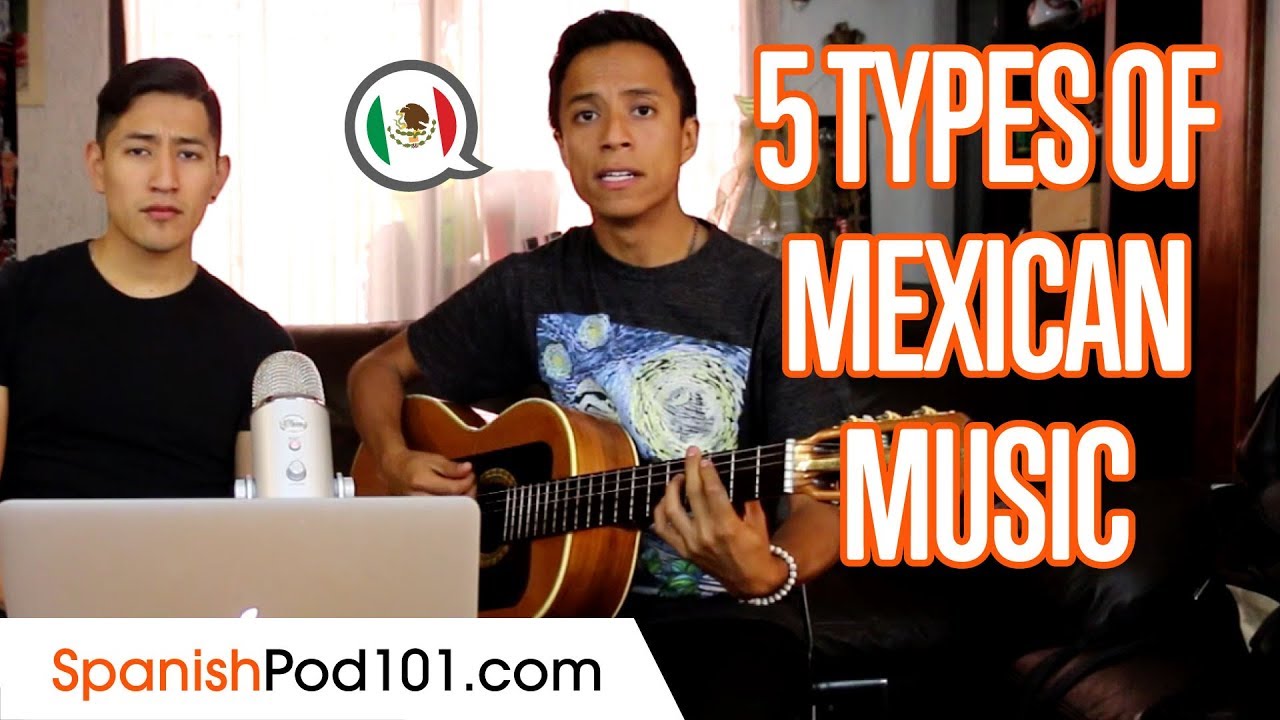
Love Mexican music beyond the anthem? Watch our video about five types of Mexican music, from mariachi to banda:
8. Useful Spanish Vocabulary
Here are useful Spanish words for talking about the anthem and national celebrations. Tap each one to hear it:
(el) himno nacional
“national anthem”
(la) bandera
“flag”
(la) libertad
“freedom”
(la) independencia
“independence”
(el) héroe
“hero”
(la) guerra
“war”
(la) letra
“lyrics”
(el) verso
“verse, line”
(el) coro
“chorus”
cantar
“to sing”
(el) desfile
“parade”
(el) aficionado
“fan”
Practice: talk about the anthem in Spanish
| Spanish | English |
|---|---|
| El himno de México tiene letra. | “Mexico’s anthem has lyrics.” |
| Todos cantan el himno en el estadio. | “Everyone sings the anthem in the stadium.” |
| ¿Te sabes la letra del himno de tu país? | “Do you know the words to your country’s anthem?” |
| Nos pusimos de pie cuando sonó el himno. | “We stood up when the anthem played.” |
Try saying each sentence out loud, then make one about your own country’s anthem.
9. Quiz: How Well Do You Know the Himno Nacional?
Check what you’ve learned about the Mexican national anthem. Tap an answer to see if you’re right.
Question 1. Who wrote the lyrics of the Mexican national anthem?
A. Jaime Nunó
✗ Not quite. Nunó wrote the music.
B. Francisco González Bocanegra
✓ Correct! He wrote the poem in 1853, famously encouraged by his fiancée.
C. Antonio López de Santa Anna
✗ Not quite. Santa Anna’s government organized the contest, but he didn’t write the anthem.
Question 2. When did the anthem become official?
A. 1854
✗ Not quite. That’s when it was first performed. It was used for decades before becoming official.
B. 1910
✗ Not quite. Try another answer.
C. 1943
✓ Correct! President Manuel Ávila Camacho made it official by decree in 1943.
Question 3. What does la letra mean when we talk about a song?
A. the lyrics
✓ Correct! La letra is the words of a song. It also means “letter.”
B. the chorus
✗ Not quite. The chorus is el coro.
C. the flag
✗ Not quite. The flag is la bandera.
Question 4. Who is “Masiosare”?
A. The anthem’s composer
✗ Not quite. Try another answer.
B. A misheard phrase that kids think is a name
✓ Correct! Mas si osare means “but if … should dare.” Many kids hear it as a name!
C. A Mexican football star
✗ Not quite. Try another answer.
10. Mexican National Anthem FAQ
What is the Mexican national anthem called?
It’s called the Himno Nacional Mexicano. It’s also known by its first line, “Mexicanos, al grito de guerra” (“Mexicans, at the cry of war”).
Who wrote the Mexican national anthem?
The lyrics are by the poet Francisco González Bocanegra (1853), and the music is by the Catalan composer Jaime Nunó (1854).
How many stanzas does the Mexican national anthem have?
The original poem has ten stanzas and a chorus. The official version, set by law, uses the chorus and four stanzas.
When did the Mexican national anthem become official?
It was first performed on September 15, 1854, but it only became official in 1943, by decree of President Manuel Ávila Camacho.
Can you change the Mexican national anthem?
No. Mexican law prohibits changing its lyrics or music, or performing it in other arrangements. Breaking the rules can lead to a fine.
Final Thoughts
From a fiancée’s locked door in 1853 to 87,000 voices at the 2026 World Cup, the Himno Nacional Mexicano is much more than a song. It’s something almost every Mexican learned at school, sings at every big moment, and feels deeply proud of.
Want to keep going? Compare it with Spain’s anthem, which has no words at all, in our post on the Spanish national anthem. And discover how songs can boost your Spanish in Learning Spanish Through Music.
Learn the Spanish Mexicans really speak
From ordering tacos to chatting about the big match, the free video course Can Do Mexican Spanish for Absolute Beginners teaches you practical, everyday Mexican Spanish with native hosts.
Start the CourseDoes your country’s national anthem have lyrics? Do you know all the words? Tell us in the comments!