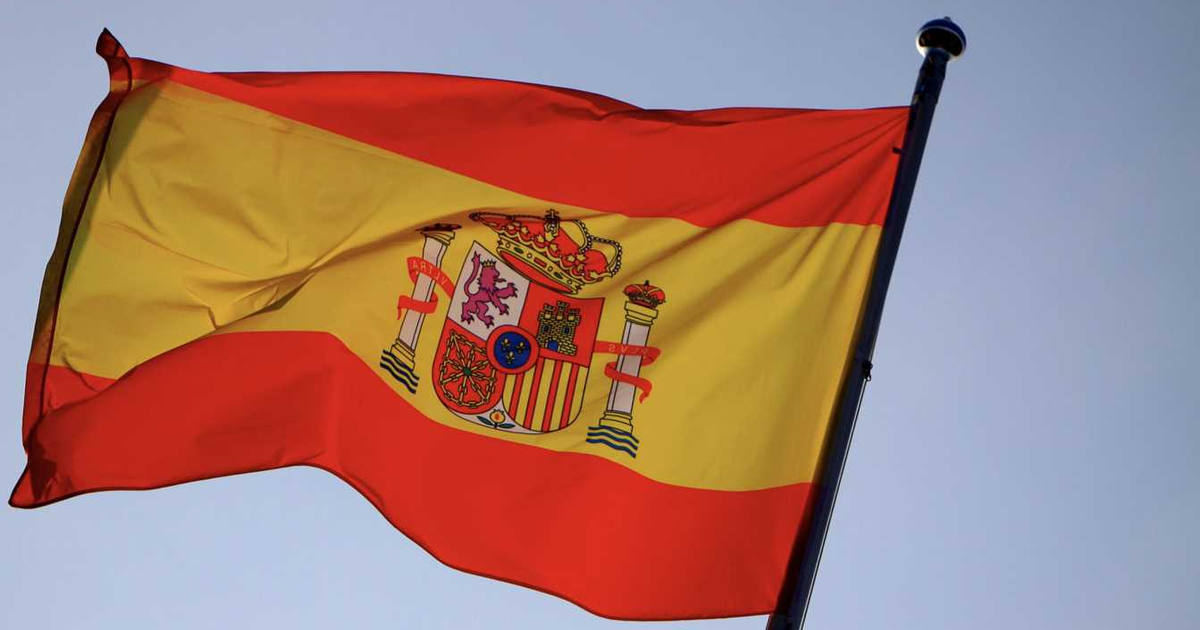
Before every Spain football match, the cameras pan along the line of players as the anthem plays. Some close their eyes, some hum, and some just stand in silence. Nobody sings, and there’s a simple reason: the Spanish national anthem has no official lyrics.
The “Marcha Real” is one of the oldest national anthems in the world, and one of very few with no words at all. In this guide, you’ll get the short answer first, then an easy timeline of its history, the attempts to add lyrics, when you’ll hear it in Spain, and useful Spanish vocabulary for talking about it.
Why Does Spain’s National Anthem Have No Lyrics? The Short Answer
Quick answer
The Marcha Real started life in the 18th century as a military march, so it never had words. Lyrics have been written for it several times, but none has ever been made official. The best-known words are linked to the Franco dictatorship, and Spain’s many languages and identities make it hard to agree on new ones.
| Name | Marcha Real (“Royal March”), also Marcha Granadera |
| First appears | 1761, in a military book of bugle and drum calls |
| Official lyrics | None |
| Official versions | Complete (52 seconds) and short (27 seconds) |
| What people do | Stand, listen, or hum along: “lo, lo, lo” |
Table of Contents
- What Is the Spanish National Anthem?
- Marcha Real Timeline: From 1761 to Today
- Why Doesn’t the Spanish National Anthem Have Lyrics?
- Attempts to Give the Anthem Words
- The Official Rules: Two Versions
- When Do You Hear the Marcha Real?
- The Anthem at Sports Events
- Useful Spanish Vocabulary
- Quiz: How Well Do You Know the Marcha Real?
- Spanish National Anthem FAQ
- Final Thoughts
1. What Is the Spanish National Anthem?
The national anthem of Spain is the Marcha Real (“Royal March”). It is also known as the Marcha Granadera (“Grenadier March”), because it began life as a military march for the grenadiers of the Spanish infantry. In everyday Spanish, people usually just call it el himno nacional or el himno de España.
It is an instrumental piece of music that lasts less than a minute. Spain shares its wordless anthem status with only a handful of countries: today, Spain, Bosnia and Herzegovina, Kosovo, and San Marino are the only nations whose national anthems have no official lyrics.
2. Marcha Real Timeline: From 1761 to Today
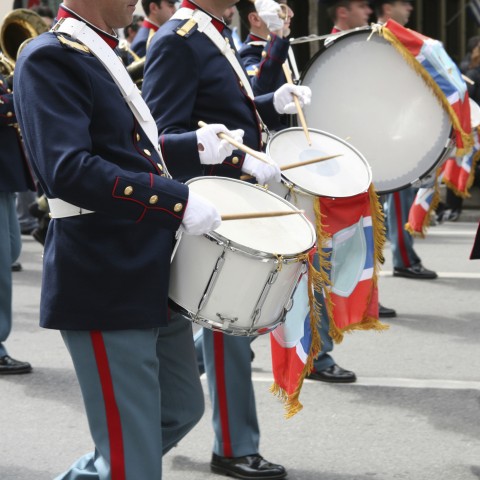
The melody first appears in 1761, in a Spanish army book of military bugle and drum calls. It is usually credited to Manuel de Espinosa de los Monteros. On September 3, 1770, King Charles III (Carlos III) declared it Spain’s official “Honor March,” to be played at solemn public occasions.
Over the following century, the march became so closely linked to the monarchy and the nation that, during the reign of Queen Isabella II (1833–1868), it came to be used as Spain’s national anthem.
Here’s the whole story at a glance. The labels show which events made something official and which were unofficial proposals that never became law.
| Year | What happened | Status |
|---|---|---|
| 1761 | The melody appears in a Spanish army book of bugle and drum calls. | Other |
| 1770 | On September 3, King Charles III makes it Spain’s official “Honor March.” | Official |
| 1833–1868 | Under Queen Isabella II, it comes to be used as the national anthem. | Other |
| 1870 | General Prim’s contest for a new anthem gets 400+ entries but is dropped. | Other |
| 1908 | Bartolomé Pérez Casas’s orchestration becomes the official version. | Official |
| Early 1900s | Eduardo Marquina writes lyrics. | Unofficial |
| 1928 | José María Pemán writes lyrics, later used in the Franco era. | Unofficial |
| 1931–1939 | The Second Republic uses the Himno de Riego instead. | Other |
| After 1939 | The Marcha Real is restored as the anthem. | Official |
| 1997 | Royal Decree 1560/1997 sets the current official music and versions. | Official |
| 2007–2008 | The Spanish Olympic Committee chooses lyrics, then withdraws them days later. | Unofficial |
| 2018 | Singer Marta Sánchez performs her own lyrics in Madrid. | Unofficial |
3. Why Doesn’t the Spanish National Anthem Have Lyrics?
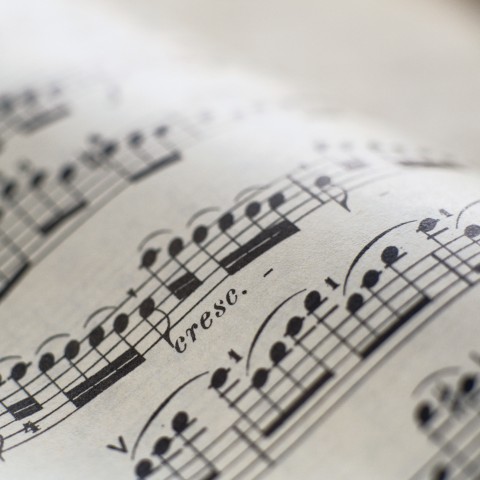
The Marcha Real was written as a military march, so it never had words to begin with. Over the years, several sets of lyrics were written for it, but none were ever made official. There are a few reasons for this:
- History: The best-known lyrics were used during the Franco dictatorship. After Spain returned to democracy, those words were dropped, and many people associate any lyrics with that period.
- Language and identity: Spain is a country of many languages and identities. Besides Spanish, Catalan, Basque, and Galician are co-official in their regions, so agreeing on one set of words that everyone feels represents them is very difficult.
- No agreement: Every new proposal has been criticized from one side or another, so none has gained enough support to become official.
As a result, when Spaniards “sing” the anthem, they often hum the melody instead, sometimes going “lo, lo, lo” along with the music.
If you want to learn Spanish through music, you’ll need songs with words! Our video Learning Spanish Through Music shares four simple techniques: listen passively in the background, study the lyrics line by line, sing along, and try writing down the words as you listen.
4. Attempts to Give the Anthem Words
None of these lyrics was ever made official. Here’s a little more about each attempt:
- Eduardo Marquina wrote lyrics in the early 20th century, during the reign of King Alfonso XIII. They were never made official.
- José María Pemán wrote a version in 1928. Lyrics based on his words were used during the Franco era, but they were never formally adopted, and they were abandoned after the return to democracy.
- 2007–2008: The Spanish Olympic Committee held a contest to find lyrics, hoping Spanish athletes could sing on the podium. A winning text was chosen in January 2008, but it faced strong criticism and was withdrawn just days later.
- 2018: Pop singer Marta Sánchez performed her own lyrics at a concert in Madrid. Her version got a lot of attention, but it also faced criticism and never became official.
So for now, the Marcha Real remains a song without words.
5. The Official Rules: Two Versions
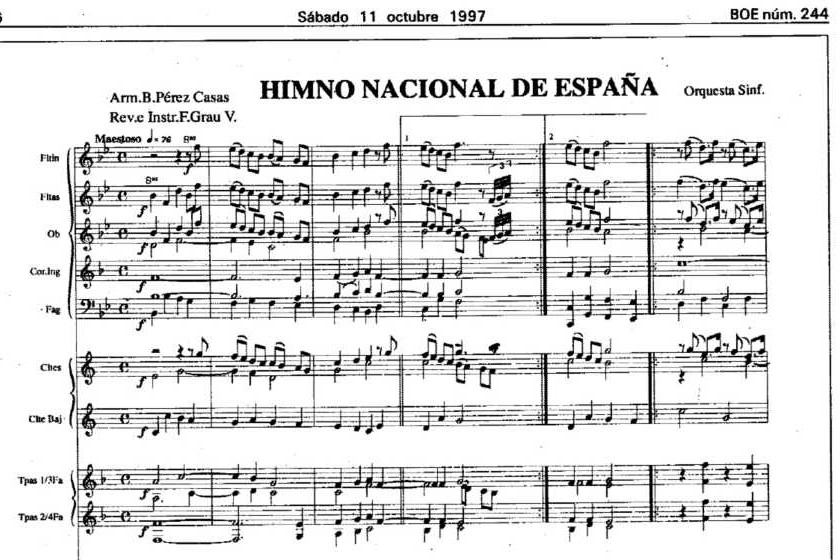
The anthem’s current form is set out in Royal Decree 1560/1997 of October 10, 1997. Earlier that month, the Spanish state also bought the rights to the music, which had belonged to the heirs of Pérez Casas. The current official arrangement is by the composer Francisco Grau.
The decree describes the music in detail: it is in B-flat major, at a tempo of 76 beats per minute, and it has two official versions:
| Version | Length | When it’s used (examples) |
|---|---|---|
| Complete version (versión completa) | 52 seconds | Ceremonies honoring the Spanish flag and official events attended by the King or Queen |
| Short version (versión breve) | 27 seconds | Official events attended by the Prince or Princess of Asturias, the Infantes, or the President of the Government |
The decree also states that the anthem must always be played in full and only once.
6. When Do You Hear the Marcha Real?
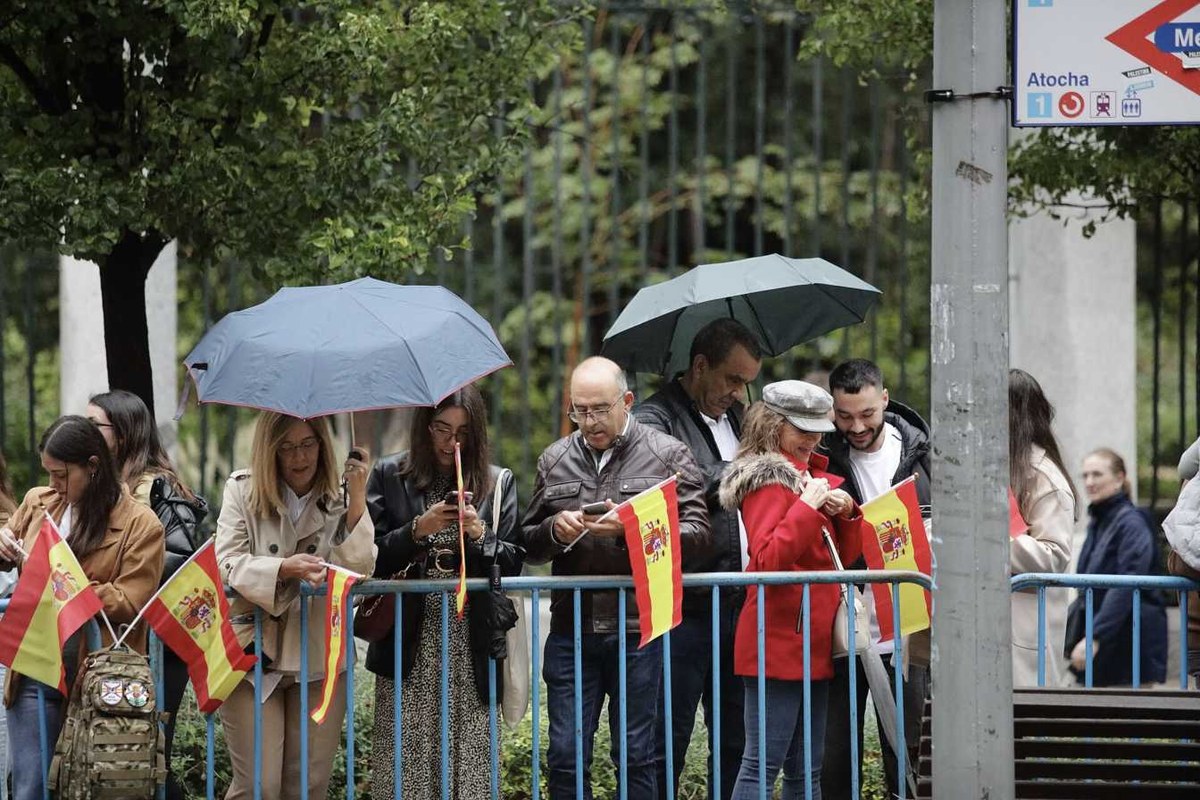
You’ll hear the Marcha Real at official ceremonies, state visits, military events, and international sports competitions. One of the biggest occasions is the Fiesta Nacional de España (Spain’s National Day) on October 12.
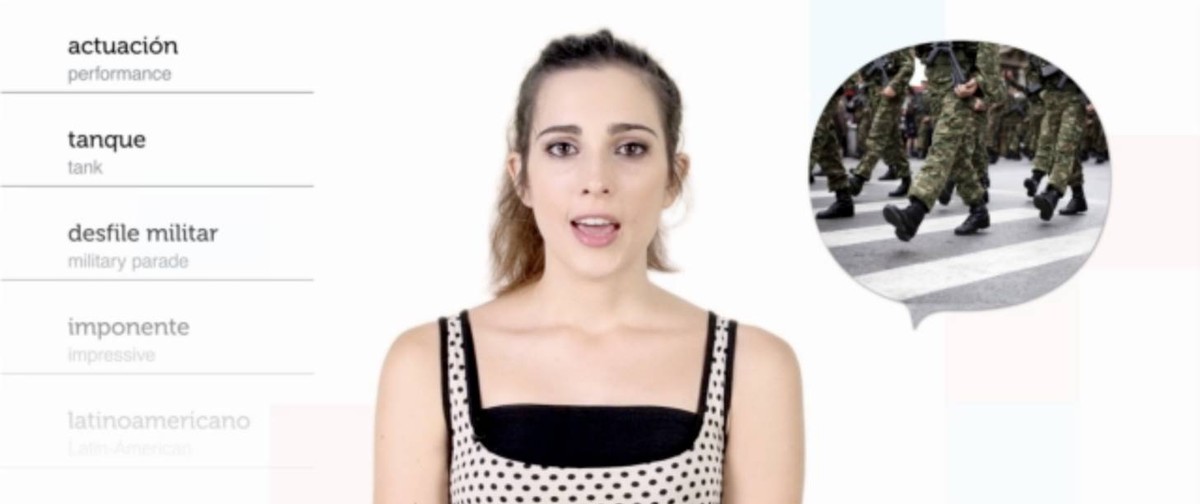
In our video lesson Hispanic Day, host Rosa explains how this day is celebrated. In Madrid, there is an impressive desfile militar (military parade) with units from all branches of the armed forces, including aircraft and tanks. It’s attended by the King, the royal family, the country’s top politicians, and representatives of Spain’s autonomous communities, and the national anthem is played as part of the ceremony.
Rosa shares a few more details that are useful if you’re visiting Spain in October. October 12 is also the feast day of the Virgen del Pilar, the patron saint of Zaragoza and of Spain, and many museums and palaces in Madrid hold open days for visitors. You’ll hear the day called by several names, too: officially it’s the Fiesta Nacional de España, but people also say Día de la Hispanidad or Día Nacional de España.
See how Spain celebrates its National Day
Watch Rosa’s video lesson Hispanic Day to learn what happens on October 12, from the military parade in Madrid to the Virgen del Pilar, with key Spanish words on screen.
Watch Rosa’s Lesson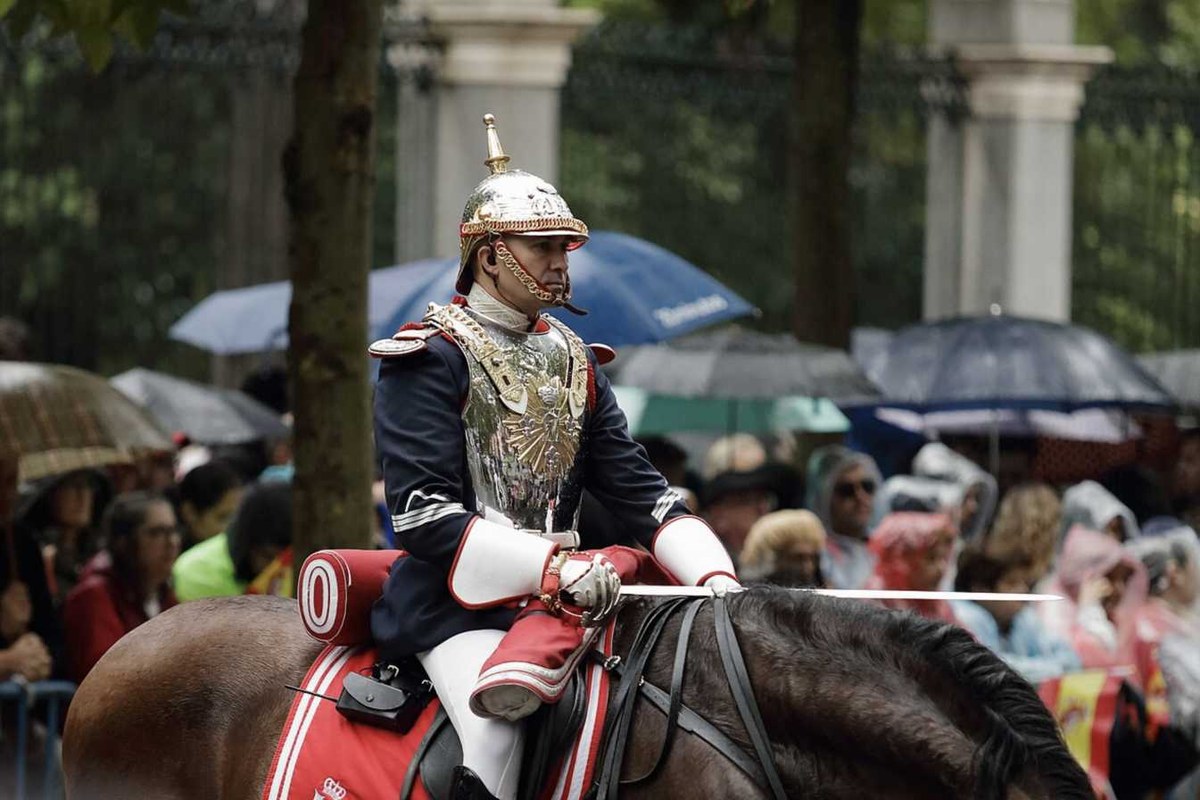
When the anthem is played, people are expected to stand. Civilians stand still and quietly, while members of the military who are not in formation salute.
7. The Anthem at Sports Events
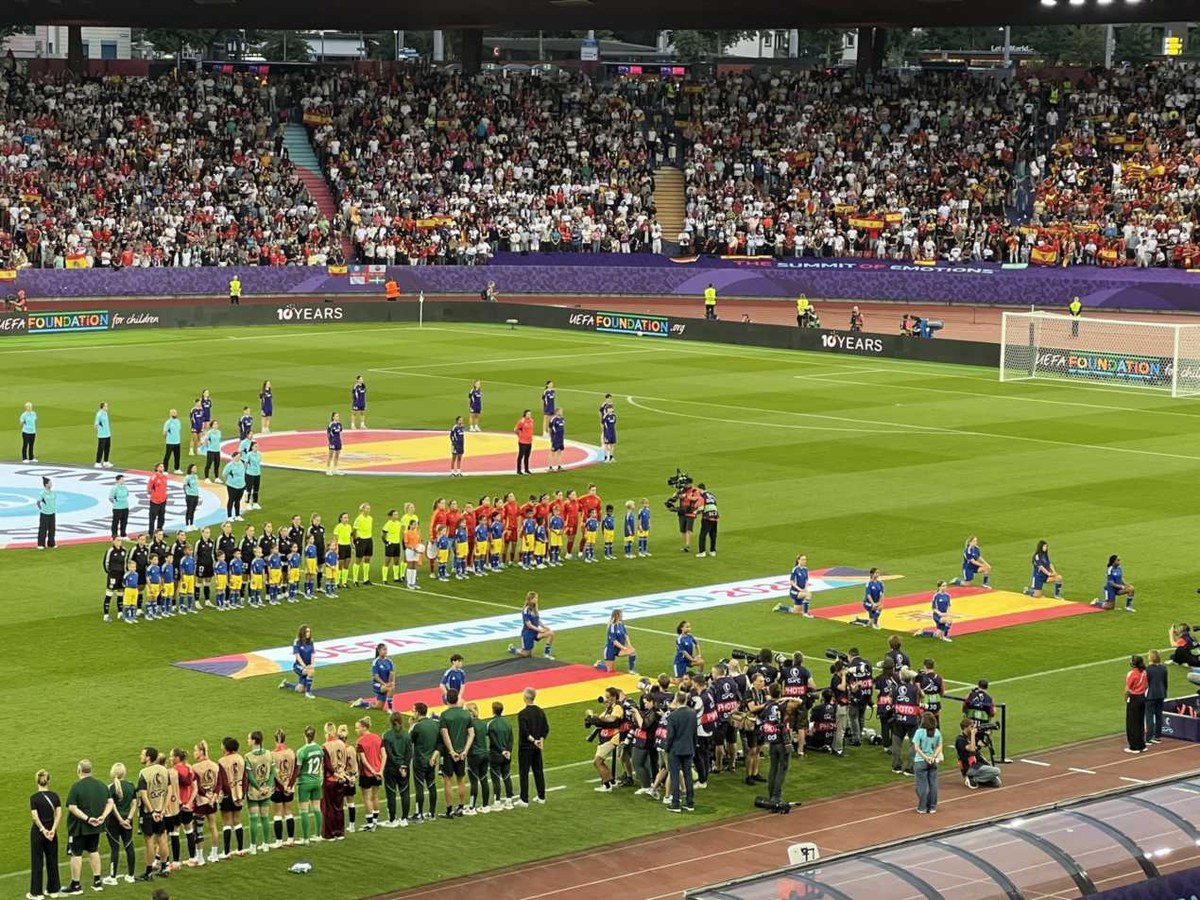
Sports fans around the world often notice something unusual during Spain’s matches: while the other team sings its anthem loudly, the Spanish players stand in silence. Because there are no words, players and fans listen, hum the tune, or sing along with “lo, lo, lo.”
The same thing happens on the podium. When Spanish athletes win gold at big international events, the Marcha Real is played, and they listen or hum along. Moments like these helped inspire the Spanish Olympic Committee’s search for lyrics in 2007.
If you love football, listen to our audio blog lesson Real Madrid VS Barcelona (Spain) to learn about one of the biggest rivalries in Spanish sport.
8. Useful Spanish Vocabulary
Here are some useful Spanish words for talking about the national anthem and national celebrations:
| Spanish | English |
|---|---|
| el himno nacional | national anthem |
| la Marcha Real | the Royal March (Spain’s anthem) |
| la letra | lyrics, words of a song |
| sin letra | without lyrics |
| tararear | to hum |
| ponerse de pie | to stand up |
| la bandera | flag |
| el rey / la reina | king / queen |
| el desfile militar | military parade |
| la Fiesta Nacional | National Day |
| la selección española | Spain’s national team |
| la afición | fans, supporters |
Practice: talk about the anthem in Spanish
| El himno de España no tiene letra. | Spain’s anthem has no lyrics. |
| La gente lo tararea. | People hum it. |
| ¿Te sabes la letra de tu himno? | Do you know the words to your anthem? |
| Nos pusimos de pie cuando sonó el himno. | We stood up when the anthem played. |
Try saying each sentence out loud, then make one about your own country’s anthem.
9. Quiz: How Well Do You Know the Marcha Real?
Check what you’ve learned about the Spanish national anthem. Tap an answer to see if you’re right.
Question 1. Why doesn’t the Marcha Real have official lyrics?
Question 2. Which of these was an unofficial proposal?
Question 3. What does tararear mean?
10. Spanish National Anthem FAQ
What is the Spanish national anthem called?
It’s called the Marcha Real (“Royal March”). It is also known as the Marcha Granadera (“Grenadier March”).
Does the Spanish national anthem have lyrics?
No. The Spanish national anthem has no official lyrics. Several versions have been written over the years, but none has ever been officially adopted.
How old is the Spanish national anthem?
The melody first appeared in 1761, and King Charles III declared it Spain’s Honor March in 1770. It is one of the oldest national anthems in Europe still in use.
How long is the Spanish national anthem?
According to Royal Decree 1560/1997, the complete version lasts 52 seconds and the short version lasts 27 seconds.
Why don’t Spanish players sing the anthem?
Because there are no official words to sing. Instead, players and fans usually stand in silence or hum the melody.
11. Final Thoughts
The Spanish national anthem proves that a song doesn’t need words to bring people together. From its beginnings as a military march in 1761 to today’s football stadiums, the Marcha Real has become one of the most recognizable anthems in the world, even if nobody can sing it!
Want to keep going? Discover how songs with words can boost your Spanish in Learning Spanish Through Music, and find even more lessons on SpanishPod101.
Learn Spanish through Spain’s biggest national celebration
Watch Rosa’s video lesson Hispanic Day and pick up the words you’ll hear on October 12.
Watch the Hispanic Day LessonDoes your country’s national anthem have lyrics? Do you know all the words? Tell us in the comments!
Featured image: Catherine Kõrtsmik, CC BY 2.0, via Wikimedia Commons (cropped).