Spanish You’ll Need When Moving House in Mexico
Moving house in Mexico involves much more than unpacking boxes. During your first few weeks, you may need to finalize a rental agreement, arrange internet service, contact your landlord or building administrator, learn how trash collection works in your area, introduce yourself to neighbors, and update your address with the organizations that need it.
For many foreign residents, these everyday tasks can feel more stressful than the move itself. Even if your Spanish is good enough for restaurants or shopping, housing-related conversations often include unfamiliar vocabulary, formal expressions, and paperwork that you may not have practiced before.
The good news is that you don’t need perfect Spanish to manage these situations. Learning a small set of practical phrases can help you ask questions, understand important information, and communicate politely with real estate agents, landlords, service providers, neighbors, and government staff.
In this guide, you’ll learn 40 essential Mexican Spanish phrases for seven common situations you’ll encounter when moving house in Mexico. Each section also includes useful vocabulary, a short dialogue, and practical context to help you prepare for real conversations.
Table of Contents
What Do You Need to Handle When Moving House in Mexico?
When moving house in Mexico, you may need to:
- Rent or finalize an apartment or house
- Understand your rental agreement
- Set up internet and Wi-Fi
- Talk to your landlord or building administrator
- Introduce yourself to neighbors
- Learn local trash and recycling rules
- Update your address with immigration, banks, service providers, and other organizations as needed
Each of these situations involves practical Spanish that may not appear in a beginner textbook. Learning the key phrases in advance can save time, reduce misunderstandings, and make the move much easier.
For a broader guide to immigration, banking, utilities, healthcare, and other parts of daily life, see The Ultimate Spanish Guide for Living in Mexico: 160+ Essential Phrases for Visa, Immigration, Moving & Daily Life.
Renting or Finalizing Your Apartment
Whether you’re looking at apartments or preparing to sign, you’ll probably speak with an agent, owner, or property representative several times. Knowing a few common expressions helps you ask about price, availability, move-in dates, and what is included.
For extra listening practice, try SpanishPod101’s Looking At Apartments in Mexico lesson.
Common Situations
You may need to:
- Ask about monthly rent
- Confirm whether a property is still available
- Arrange a viewing
- Ask when you can move in
- Check whether it is furnished
- Ask whether maintenance or utilities are included
6 Essential Mexican Spanish Phrases
| Spanish | English |
|---|---|
| ¿Cuánto cuesta la renta al mes? | How much is the rent per month? |
| ¿Este departamento sigue disponible? | Is this apartment still available? |
| Quisiera ver el departamento. | I’d like to see the apartment. |
| ¿Cuándo puedo mudarme? | When can I move in? |
| ¿Está amueblado? | Is it furnished? |
| ¿La renta incluye el mantenimiento? | Does the rent include the maintenance fee? |
Dialogue Example
Agent
Este departamento sigue disponible.
This apartment is still available.
Resident
Perfecto. ¿Cuánto cuesta la renta al mes?
Perfect. How much is the rent per month?
Agent
Son quince mil pesos al mes, más servicios.
It’s 15,000 pesos per month, plus utilities.
Key Vocabulary
| Spanish | English |
|---|---|
| la renta | rent |
| el departamento | apartment |
| la casa | house |
| amueblado / amueblada | furnished |
| el mantenimiento | maintenance fee |
| los servicios | utilities / services |
| la inmobiliaria | real estate agency |
Understanding Your Rental Agreement

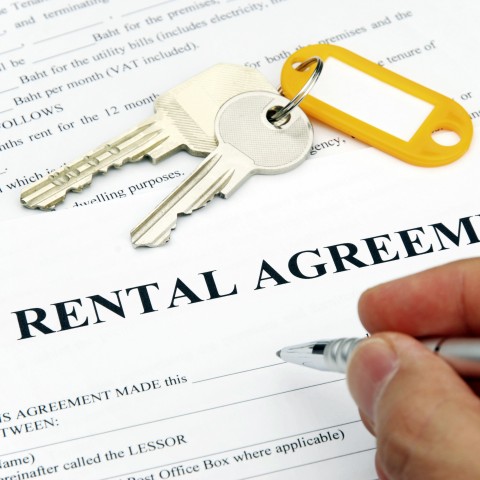
Rental paperwork in Mexico can include terms that are unfamiliar even to intermediate Spanish learners. Requirements also vary by property and landlord, so read the agreement carefully and ask about anything you don’t understand before signing.
You may hear contrato de arrendamiento for rental agreement or lease, and arrendador for landlord. In everyday conversation, people may also simply say contrato, dueño, or casero depending on the situation.
Common Situations
You may need to:
- Confirm the contract term
- Ask about the security deposit
- Ask whether a guarantor is required
- Clarify how much notice you must give before leaving
- Check what costs are included
- Ask someone to explain a clause
6 Essential Mexican Spanish Phrases
| Spanish | English |
|---|---|
| ¿Por cuánto tiempo es el contrato? | How long is the contract? |
| ¿Cuánto es el depósito? | How much is the security deposit? |
| ¿Necesito aval o fiador? | Do I need a guarantor? |
| ¿Con cuánto tiempo debo avisar si me voy? | How much notice do I need to give if I move out? |
| ¿Qué gastos están incluidos en la renta? | What expenses are included in the rent? |
| ¿Me puede explicar esta cláusula? | Could you explain this clause to me? |
Dialogue Example
Resident
¿Me puede explicar esta cláusula?
Could you explain this clause to me?
Agent
Claro. Aquí dice cuánto tiempo dura el contrato y cuánto debe dejar de depósito.
Of course. This says how long the agreement lasts and how much you need to leave as a deposit.
Resident
Entiendo. ¿Necesito aval o fiador?
I see. Do I need a guarantor?
Key Vocabulary
| Spanish | English |
|---|---|
| el contrato de arrendamiento | rental agreement / lease |
| el arrendador | landlord / lessor |
| el arrendatario | tenant / lessee |
| el depósito | security deposit |
| el aval | guarantor / guarantee |
| el fiador | guarantor |
| la cláusula | clause |
| el plazo | term / period |
Setting Up Internet and Wi-Fi
After moving in, getting internet service is often one of the first practical tasks. Depending on the property, service may already be available or you may need to arrange a new installation.
Before signing up, it is useful to ask about the monthly price, installation costs, equipment, technician visits, and whether the plan has a plazo forzoso, or mandatory contract period.
Common Situations
You may need to:
- Ask about available internet plans
- Confirm the monthly price
- Arrange installation
- Ask whether installation costs extra
- Check whether the modem or router is included
- Ask about a mandatory contract term
6 Essential Mexican Spanish Phrases
| Spanish | English |
|---|---|
| Quiero contratar internet para mi casa. | I’d like to get internet service for my home. |
| ¿Cuánto cuesta al mes? | How much does it cost per month? |
| ¿Cuándo puede venir el técnico? | When can the technician come? |
| ¿La instalación tiene costo? | Is there an installation fee? |
| ¿El módem está incluido? | Is the modem included? |
| ¿Hay plazo forzoso? | Is there a mandatory contract term? |
Dialogue Example
Customer
Quiero contratar internet para mi casa.
I’d like to get internet service for my home.
Representative
Claro. ¿Ya hay servicio instalado en el domicilio?
Of course. Is service already installed at the address?
Customer
No estoy seguro. ¿Cuándo puede venir el técnico?
I’m not sure. When can the technician come?
Key Vocabulary
| Spanish | English |
|---|---|
| el internet | internet |
| el módem | modem |
| el router | router |
| la instalación | installation |
| el técnico | technician |
| la mensualidad | monthly payment |
| el plazo forzoso | mandatory contract term |
| el domicilio | address / residence |
Talking to Your Landlord or Building Administrator
Sooner or later, you may need to contact your landlord, property manager, or building administrator. Common reasons include a leak, a broken appliance, a maintenance issue, or arranging access for a repair.
In apartment buildings and condominiums, administrador may refer to the person or company that handles shared building matters, while the owner of your individual unit may be your arrendador, dueño, or casero.
Common Situations
You may need to:
- Report something that is broken
- Report a water leak
- Ask for a repair
- Ask when someone can come
- Ask to be notified before a visit
- Thank the person helping you
6 Essential Mexican Spanish Phrases
| Spanish | English |
|---|---|
| El aire acondicionado no funciona. | The air conditioner isn’t working. |
| Hay una fuga de agua. | There’s a water leak. |
| Quisiera pedir una reparación. | I’d like to request a repair. |
| ¿Cuándo puede venir alguien a revisarlo? | When can someone come take a look at it? |
| ¿Me puede avisar antes de venir? | Could you let me know before coming? |
| Muchas gracias por su ayuda. | Thank you very much for your help. |
Dialogue Example
Resident
Hola. Hay una fuga de agua en la cocina.
Hello. There’s a water leak in the kitchen.
Landlord
Entiendo. Voy a llamar a alguien para que la revise.
I understand. I’ll call someone to take a look at it.
Resident
Gracias. ¿Me puede avisar antes de venir?
Thank you. Could you let me know before coming?
Key Vocabulary
| Spanish | English |
|---|---|
| el arrendador | landlord |
| el casero | landlord / property owner, informal |
| el administrador | building administrator / manager |
| la reparación | repair |
| la fuga de agua | water leak |
| la avería | breakdown / fault |
| el mantenimiento | maintenance |
| revisar | to check / inspect |
Talking to Neighbors in Mexico
Introducing yourself to your neighbors is not a formal requirement, but a friendly greeting can make settling into a new building or neighborhood much easier. In many places, a short introduction is enough.
You do not need a long speech. A simple Mucho gusto and Me acabo de mudar can start the conversation naturally.
Common Situations
You may want to:
- Introduce yourself
- Say that you just moved in
- Say that you are the new neighbor
- Apologize for noise or inconvenience caused by the move
4 Essential Mexican Spanish Phrases
| Spanish | English |
|---|---|
| Hola, mucho gusto. | Hello, nice to meet you. |
| Me acabo de mudar. | I just moved in. |
| Soy su nuevo vecino. / Soy su nueva vecina. | I’m your new neighbor. |
| Disculpe las molestias por la mudanza. | Sorry for the inconvenience from the move. |
Dialogue Example
Resident
Hola, mucho gusto. Me acabo de mudar al departamento de al lado.
Hello, nice to meet you. I just moved into the apartment next door.
Neighbor
Mucho gusto. Bienvenido.
Nice to meet you. Welcome.
Resident
Gracias. Disculpe las molestias por la mudanza.
Thank you. Sorry for the inconvenience from the move.
Key Vocabulary
| Spanish | English |
|---|---|
| el vecino / la vecina | neighbor |
| la mudanza | move / moving process |
| mudarse | to move house |
| el edificio | building |
| el departamento | apartment |
| las molestias | inconvenience / disturbance |
Understanding Garbage and Recycling Rules

Trash collection and recycling rules vary by municipality, neighborhood, and building in Mexico. Some buildings have their own collection areas or schedules, while in other places you may need to follow the local public collection system.
Because these rules can differ significantly, ask your landlord, building administrator, or neighbors how trash is handled where you live.
Mexico City, for example, introduced a new waste-separation scheme in 2026 with different collection days for organic waste and for recyclable and non-recyclable waste. If you live elsewhere, check the rules for your own municipality rather than assuming the same schedule applies.
Common Situations
You may need to:
- Ask which days trash is collected
- Ask where to put trash
- Ask whether waste must be separated
- Find the recycling area
- Dispose of old furniture or large items
- Ask what time trash should be put out
6 Essential Mexican Spanish Phrases
| Spanish | English |
|---|---|
| ¿Qué días pasa la basura? | What days is the trash collected? |
| ¿Dónde se saca la basura? | Where do we put the trash out? |
| ¿Hay que separar la basura? | Do we need to separate the trash? |
| ¿Dónde van los reciclables? | Where do the recyclables go? |
| ¿Qué hago con los muebles viejos? | What do I do with old furniture? |
| ¿Hay un horario para sacar la basura? | Is there a set time to put the trash out? |
Dialogue Example
Resident
Disculpe, ¿qué días pasa la basura?
Excuse me, what days is the trash collected?
Neighbor
Pasa tres veces por semana, pero hay que separar los residuos.
It comes three times a week, but you need to separate the waste.
Resident
Entiendo. ¿Dónde van los reciclables?
I see. Where do the recyclables go?
Key Vocabulary
| Spanish | English |
|---|---|
| la basura | trash / garbage |
| los residuos | waste |
| los reciclables | recyclables |
| los residuos orgánicos | organic waste |
| los residuos inorgánicos | inorganic waste |
| separar | to separate |
| el contenedor | container / bin |
| la recolección | collection |
Local rules can change, so check your municipality or building’s current instructions. For one current example, see Mexico City’s official 2026 waste-separation guidance.
Changing Your Address in Mexico
After moving, you may need to update your address with banks, employers, internet and utility providers, insurers, tax or government services, and other organizations that use your domicilio or comprobante de domicilio.
Foreign nationals who hold temporary resident, temporary resident student, or permanent resident status should pay particular attention to the Instituto Nacional de Migración (INM). The INM states that residents must notify it of a change of address within 90 calendar days of the change. Current INM guidance also lists change-of-address notification among procedures that require an online appointment before visiting the appropriate office.
If this applies to you, check the current procedure before going because required forms and appointment steps can change.
Common Situations
You may need to:
- Tell an organization that you changed address
- Notify the INM if your immigration status requires it
- Ask which documents are necessary
- Provide your new address
- Ask whether an appointment is required
- Confirm that the update has been registered
6 Essential Mexican Spanish Phrases
| Spanish | English |
|---|---|
| Me cambié de domicilio. | I changed my address. |
| Quiero notificar mi cambio de domicilio. | I’d like to report my change of address. |
| ¿Qué documentos necesito? | What documents do I need? |
| Este es mi nuevo domicilio. | This is my new address. |
| ¿Necesito hacer una cita? | Do I need to make an appointment? |
| ¿El cambio ya quedó registrado? | Has the change been registered? |
Dialogue Example
Resident
Buenos días. Quiero notificar mi cambio de domicilio.
Good morning. I’d like to report my change of address.
Employee
¿Trae su tarjeta de residente y los documentos del trámite?
Do you have your residence card and the documents for the procedure?
Resident
Sí. Este es mi nuevo domicilio.
Yes. This is my new address.
Key Vocabulary
| Spanish | English |
|---|---|
| el domicilio | address / domicile |
| el cambio de domicilio | change of address |
| notificar | to notify / report |
| actualizar | to update |
| el comprobante de domicilio | proof of address |
| la tarjeta de residente | residence card |
| la cita | appointment |
| el trámite | procedure / application |
For current requirements, see the official INM change-notification procedure. The INM currently states that temporary and permanent residents must report changes such as domicile within 90 calendar days.
For a broader checklist of paperwork and practical tasks after arriving, see Moving to Mexico Checklist: 8 Essential Steps + Spanish Phrases for Every Situation.
Learn Practical Mexican Spanish with SpanishPod101
Moving house is easier when you can understand both what you need to say and what people are likely to say back.
SpanishPod101 can help you practice with:
- Dialogue-based lessons
- Native-speaker audio
- Mexican Spanish vocabulary
- Listening-comprehension practice
- Beginner and intermediate learning pathways
- Practical lessons for everyday situations
For a broader collection of useful real-life lessons, explore the Living in Latin America pathway.
You can also start learning Mexican Spanish with SpanishPod101 and use short daily listening sessions to become more comfortable with the kinds of conversations that come up after a move.
Conclusion and Next Steps
Moving house in Mexico can involve a surprising number of conversations, from reading a rental agreement and arranging internet service to reporting a leak, meeting neighbors, learning the local trash schedule, and updating your address.
You do not need to master every housing term at once. Start with the phrases that match the situations you are most likely to face, then practice them in short dialogues until they feel familiar.
The more comfortable you become with practical Mexican Spanish, the easier it will be to ask questions, confirm details, and handle everyday problems in your new home.
We’d Love to Hear From You
Which moving-related situation in Mexico would make you the most nervous in Spanish?
- Understanding a rental agreement
- Setting up internet
- Talking to a landlord
- Meeting your neighbors
- Figuring out trash and recycling
- Updating your address
Leave a comment below and let us know. We’ll recommend lessons and resources to help you feel more confident in that situation.