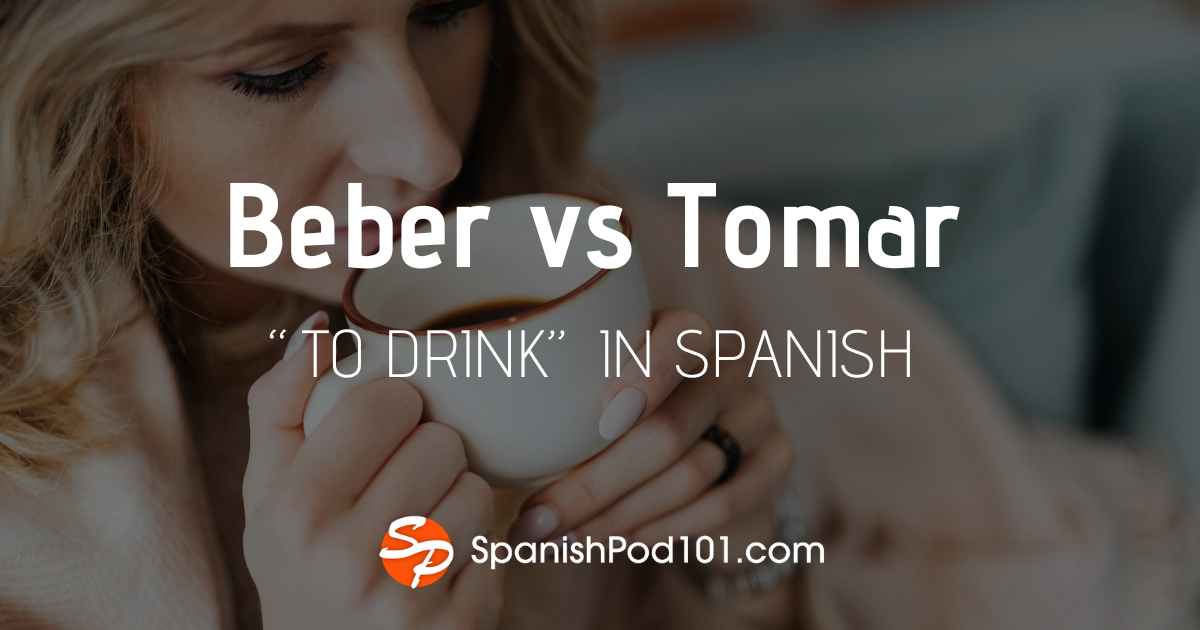
In the Spanish language, there are two common verbs that translate as “to drink” in English: beber and tomar. For a beginner learning Spanish, it may be confusing to know which one to use in a given situation. If you are wondering how to say drink in Spanish, the answer is not one single word. Spanish speakers use beber and tomar in different contexts.
Both verbs effectively mean “to drink,” but they have subtle differences in usage and meaning. This article will explain when to use beber vs. tomar, so you can confidently talk about drink in Spanish language contexts without mixing them up.
Table of Contents- Meaning and Usage of Beber (to Drink)
- Meaning and Usage of Tomar (to Take, to Have, to Drink)
- Using Beber and Tomar Interchangeably for Drinks
- Regional Differences and Nuances: Tomar vs. Beber
- Examples: How to Say “Drink” in Spanish in Different Ways
- Conclusion: Choosing Between Beber and Tomar
1. Meaning and Usage of Beber
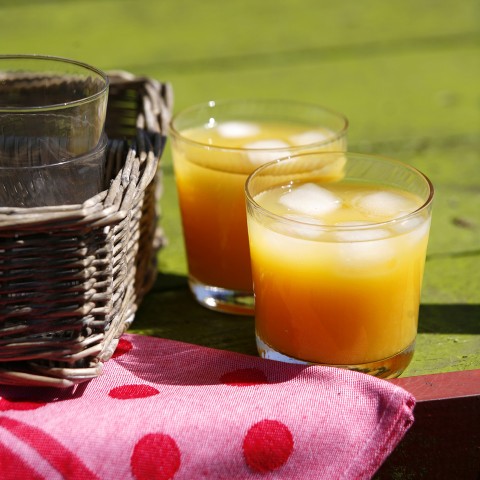
The verb beber (pronounced beh-BEHR) means “to drink.” It is the straightforward translation of the English verb “drink.” Unlike tomar, the verb beber is used exclusively for the action of drinking liquids.
In other words, beber in Spanish means “to drink” in the most direct sense, and it is not used for other meanings like “take” or “have.” For example, beber agua means “to drink water,” and beber vino means “to drink wine.”
As a regular -ER verb, beber is easy to conjugate for beginners. For instance, “yo bebo” means “I drink,” “tú bebes” means “you drink,” and “él/ella bebe” means “he/she drinks.” You can use beber anytime you want to say that someone drinks something. Here are a few simple examples:
Yo bebo agua. – “I drink water.”
¿Qué bebes? – “What are you drinking?”
Ella bebe café por la mañana. – “She drinks coffee in the morning.”
Notice that beber is only about drinking liquids. In fact, the Spanish noun for “a drink” (as in a beverage) is bebida, which comes from the verb beber. For example, the “drinks” section of a menu in Spanish is often labeled “Bebidas,” covering items like soft drinks, coffee, and tea. This reinforces that beber and its forms relate specifically to beverages.
In some contexts, using beber without specifying what is being drunk can imply drinking alcohol. For instance, the phrase “Si bebes, no conduzcas” (“If you drink, do not drive”) is understood to refer to drinking alcoholic beverages. Likewise, someone saying “Él bebe mucho” could be taken to mean “He drinks a lot (alcohol)” if no drink is specified, depending on context.
However, if you do specify the drink (e.g. bebe agua, bebe jugo), it simply means to drink that non-alcoholic beverage, with no alcoholic connotation.
2. Meaning and Usage of Tomar (to Take, to Have, to Drink)

The verb tomar (pronounced toh-MAHR) has a broader meaning than beber. Tomar in Spanish means “to take” or “to have,” and it is used in a variety of contexts. For example, tomar can mean to take an object (tomar un objeto – to take an object), to take transportation (tomar el bus – to take the bus), or to take medicine (tomar medicina – to take medicine).
It can even mean “to have” in the sense of consuming something: for instance, tomar un helado means “to have ice cream.” Given this versatility, it is no surprise that tomar is also commonly used to mean “to drink” (to take a drink).
When used about beverages, tomar translates as “to have a drink” or simply “to drink.” It is similar to saying “have” in English when referring to food or drink (for example, “have a coffee”). For example, tomar agua means “to drink water” (literally “to take water”), and tomar una cerveza means “to have a beer.”
If you are wondering about tomar in English, in this context it effectively means “to drink” or “to have (a drink).”
A few examples of tomar used for drinks:
Yo tomo agua frecuentemente. – “I drink (have) water frequently.”
¿Qué te gustaría tomar? – “What would you like to drink?”
Ella toma un té cada noche antes de dormir. – “She has a tea every night before sleeping.”
Keep in mind that tomar can also refer to actions other than drinking, which beber cannot do. You would use tomar, not beber, in situations like: tomar el tren (“to take the train”), tomar una foto (“to take a photo”), or tomar medicina (“to take medicine”).
In these cases, tomar means take or consume but not literally “drink.” For example, tomar una pastilla means “to take a pill,” since a pill is not a liquid you drink. This illustrates that tomar has a wider meaning (“to take/consume”) while beber strictly means “to drink (liquid).”
Tomar is also commonly used in expressions. A very frequent one is “tomar algo,” which literally means “to take something,” but in conversation it means “to have a drink (often socially).” If friends say Vamos a tomar algo, it translates to “Let us go have a drink (or something to drink).” This could refer to alcoholic drinks or just coffee or tea, depending on context.
3. Using Beber and Tomar Interchangeably for Drinks
For the most part, when you are specifically talking about drinking a beverage, beber and tomar can be used interchangeably without changing the meaning. Both are correct if you mention what is being drunk. For example, if you want to say “I would like to drink a coffee” in Spanish, you could say either “Me gustaría beber un café” or “Me gustaría tomar un café.” Both sentences are correct and mean “I would like to drink a coffee.”
Consider these equivalent examples:
Yo bebo mucha agua. / Yo tomo mucha agua. – Both mean “I drink a lot of water.”
¿Quieres beber jugo? / ¿Quieres tomar jugo? – Both mean “Do you want to drink juice?”
Los niños bebieron leche. / Los niños tomaron leche. – Both mean “The children drank milk.”
In everyday situations involving drink Spanish expressions about beverages, you can often use either verb. Spanish speakers will understand you either way, and both will usually sound natural when used with an object like water, milk, or coffee.
4. Regional Differences and Nuances: Tomar vs. Beber

One of the main differences between tomar and beber comes down to regional preference in the Spanish-speaking world.
In many Latin American countries, tomar is commonly used for “to drink” in everyday conversation. Phrases like tomar agua or tomar cerveza are very common. In restaurants, it is also typical to hear questions such as “¿Algo de tomar?” meaning “Something to drink?”
In Spain, beber is very common for general situations involving drinking. Sentences like “Voy a beber agua” (“I am going to drink water”) sound completely natural. However, tomar is still used in specific expressions such as “tomar algo” or when ordering food and drinks.
Another nuance involves implied meaning. In some regions, beber by itself can suggest drinking alcohol, while tomar is more neutral. In other regions, both verbs are used freely for alcoholic and non-alcoholic beverages. Context usually makes the meaning clear.
Overall, whether you use beber or tomar, you are still correctly saying to drink in Spanish. The difference is mainly one of regional preference and subtle nuance.
5. Examples: How to Say “Drink” in Spanish in Different Ways
Here are common examples that answer frequent questions such as “how to say drink in Spanish” or how to express “drink in Spanish language” in sentences.
“I drink water.” – Yo bebo agua. / Yo tomo agua.
“Do you drink coffee?” – ¿Tú bebes café? / ¿Tú tomas café?
“He does not drink alcohol.” – Él no bebe alcohol. / Él no toma alcohol.
“Let us have a drink.” – Vamos a tomar algo.
“What would you like to drink?” – ¿Qué quieren tomar? / ¿Qué desean beber?
“She is drinking tea.” – Ella está bebiendo té. / Ella está tomando un té.
“I am going to drink a glass of water.” – Voy a beberme un vaso de agua.
In the last example, beberme includes the reflexive form beberme, which adds emphasis and can suggest finishing the drink. You could also say Voy a beber un vaso de agua or Voy a tomar un vaso de agua.
6. Conclusion: Choosing Between Beber and Tomar
For beginner learners, it is important to understand that beber and tomar both translate to “to drink,” but their usage depends on context and region.
Use beber when you want a direct and specific way to say “to drink.” It refers strictly to drinking liquids. Use tomar when you mean “to have” a drink or when referring more broadly to taking or consuming something.
If you are ever unsure how to say drink in Spanish, remember that both verbs are correct in most everyday situations. Context will clarify your meaning, and Spanish speakers will understand you.
In short, when deciding between tomar or beber, think of beber as the specialist and tomar as the multitasker. By understanding these differences, you can confidently use drink in Spanish correctly and naturally in conversation.